.jpg)

- আপডেট টাইম : 25/07/2026 11:37 AM
- 310 বার পঠিত
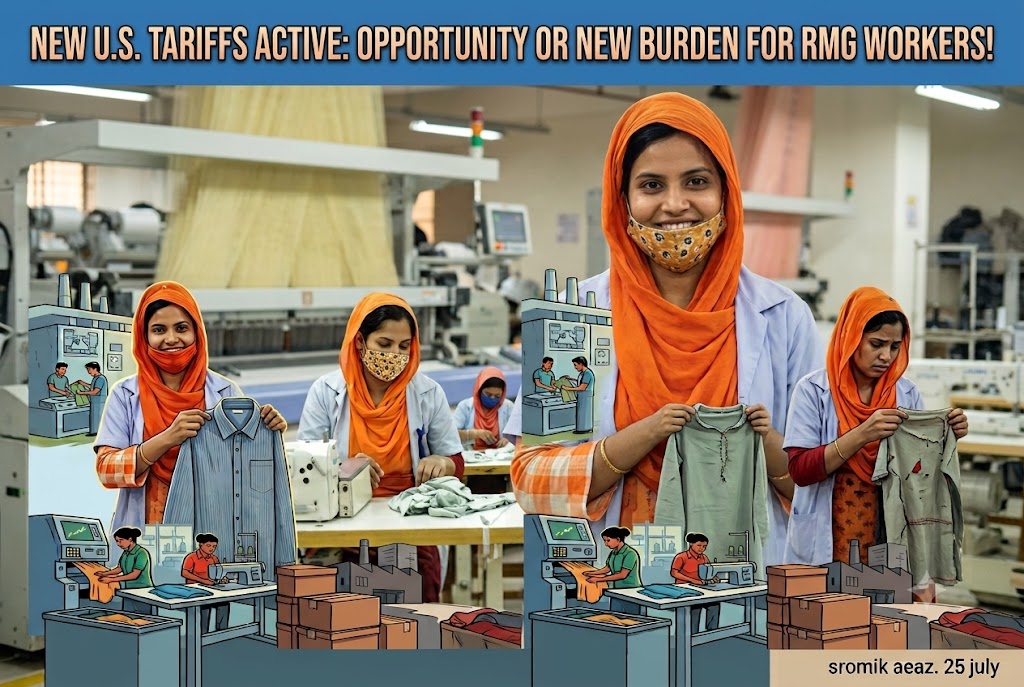
A new calculation has begun regarding Bangladesh’s garment exports to the United States market. The updated U.S. Section 301 tariff framework, which took effect on July 24, 2026, was not an unexpected move or an additional duty stacked on top of existing levies. Instead, it was part of a broader, long-term U.S. trade strategy. The initial temporary tariffs have now been formalized into a permanent legal structure, making them far harder for exporters to challenge in court.
The shift follows a landmark ruling in February 2026, when the U.S. Supreme Court struck down former President Trump’s "reciprocal" tariffs. The U.S. administration then turned to Section 301 investigations as the legal vehicle to preserve the baseline tariff level. In the interim, presidential authority under Section 122 was used to impose a temporary 10% universal tariff, which by law could remain in force for a maximum of 150 days. The Section 301 process was timed with precision: the accelerated investigation and rulemaking schedule ensured that finalized forced-labor tariffs took effect at the exact moment the Section 122 tariff expired, leaving no gap in duty collection.
Under the United States Trade Representative's (USTR) forced-labor action covering 60 economies, Bangladesh has secured a place in the lower 10% tariff tier among 17 nations. In contrast, major competitors such as China, Vietnam, Thailand, and 35 other economies face a 12.5% rate. Bangladesh qualified for the 10% tier because its February 2026 Reciprocal Trade Agreement (ART) with the U.S. had already committed the country to an import ban on forced-labor goods. By contrast, countries like India and Sri Lanka moved into the lower tier only by adopting bans between the June proposal and July final rule.
Additionally, USTR has been directed to establish—"when feasible"—two three-year Tariff Rate Quotas (TRQs) covering general U.S. textile imports and U.S. cotton usage. Once active, this mechanism will allow a defined volume of Bangladesh's textile and apparel exports to enter the U.S. duty-free. Only Bangladesh, Cambodia, Indonesia, and Malaysia qualify for this benefit, while key rivals like Vietnam, China, and India are excluded. However, this quota system is not yet operational; until an official start date is announced, the flat 10% rate applies to all exports.
At a Glance: The New Tariff Equations
2.5% Tariff Edge: Bangladesh (10%) holds a direct cost advantage over China, Vietnam, and Thailand (12.5%).
Conditional TRQ Opportunity: Duty-free quota access covers Bangladesh and three other nations while excluding China, Vietnam, and India.
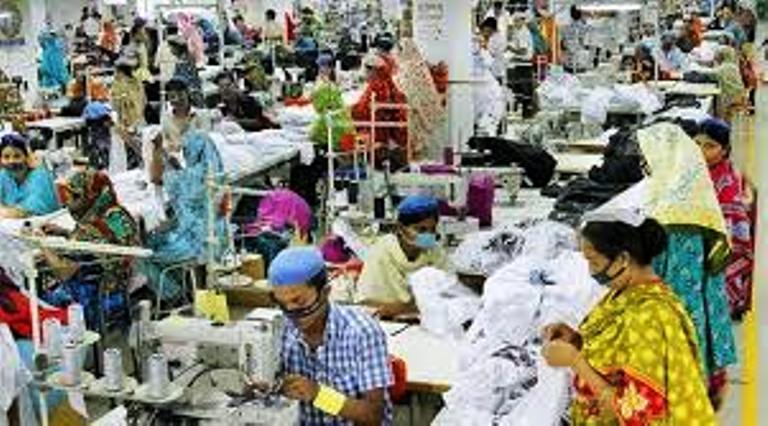
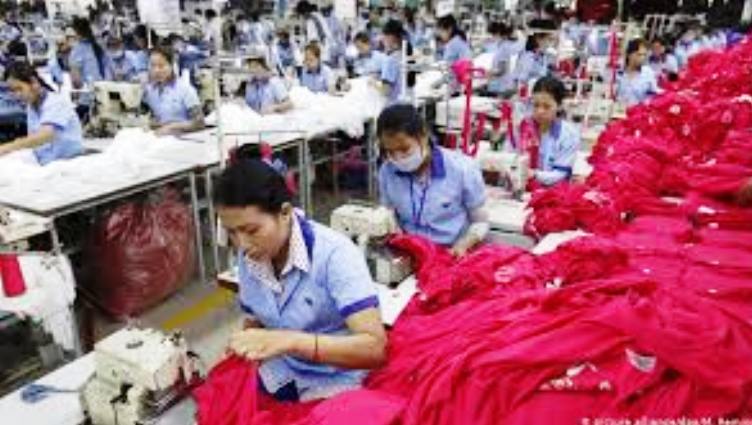
A 2.5 percentage point advantage over major competitors and potential TRQ access offer a genuine opportunity for Bangladesh's apparel sector. However, tariff changes alone will not lower costs in the U.S. market, and global competition will remain intense. To capitalize on this edge and safeguard industry stability and worker welfare, Bangladesh must focus on improving productivity, diversifying product lines, increasing value addition, and investing in innovation.











5.jpg)